_edited.png)


Makes Normal Nervous

Updated: Jan 4

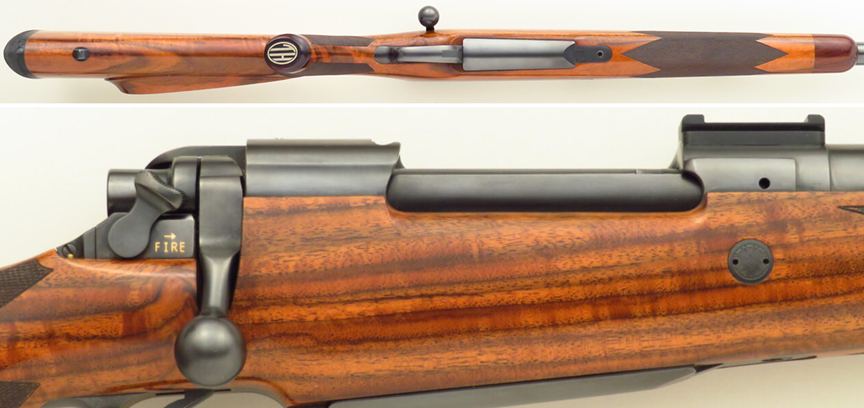
This .458 Lott is a full custom built by legendary custom maker, Gil Van Horn. It is an irreverent beast, a hammer, purpose‑built to be an African dangerous game rifle. Its irreverence isn't calculated. It's instinctual. It flat out refuses to be limited by others' expectations. Rebellious by nature, and it knows exactly what it is doing.
You could say it is extraordinary, but not in the context of a custom big bore replete with today's normal array of refinements. It's "out there", a badass tank-like working tool symbolic of early artisanal military customizations, however precisely it has been crafted.
The solid, brutish heft of the thing convinces you that you could club a buffalo with it just as effectively as you shoot one with it. It will go to Zambia later in 2026—yet again for buffalo—only this time on a genuinely classic portered foot safari, backpacking and camping as we go deep into the bush looking for ornery dagga boys.
It's based on Van Horn’s refinements to a M1917 Enfield action, a large, extremely strong, cock‑on‑closing, modified‑Mauser‑type with a massive receiver ring and generous magazine box capacity. The Enfield was one of the strongest surplus actions available to custom makers from the 1940s through the 1970s. This one was set up with a sculpted base on the receiver ring to accommodate a reflex sight. That's coming off so I can restore it pure iron sight function.
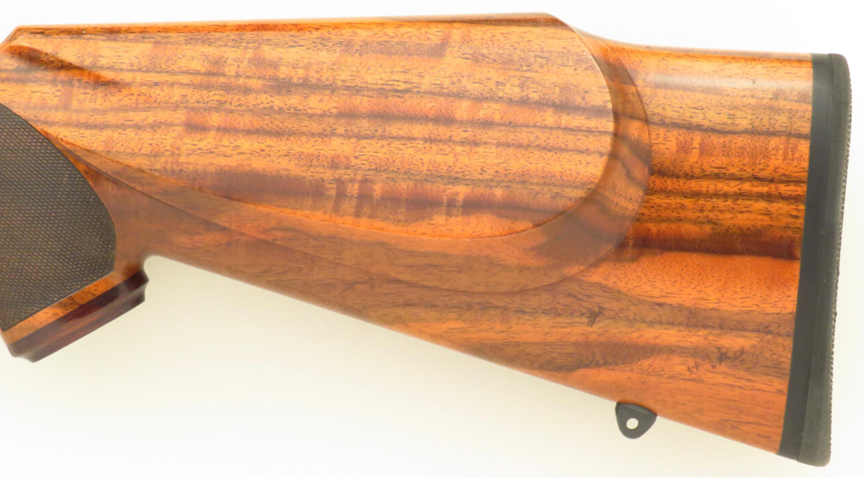
It comes to the shoulder with an all-business feel and alignment. With the barrel at 22", it balances perfectly. Having been Magna-ported by a previous owner it speaks to early attempts at recoil management. I am indifferent to the porting simply because it's there. If I were to have spec'd the gun at the start, the muzzle would be bare. The gun doesn't even wear a recoil pad, which is also OK with me.
I could also live without the rosewood for end tip. But again, I have come to accept it as an artifact of Van Horn's work as a stocker in the Roy Weatherby days. And on the subject of stocking, Gil knew how to shape, inlet and checker a stock with surgical precision!
Its brutishness stems from the Enfield platform. For a gunsmith like Van Horn and cohorts like Walter Abe, the Enfield offered several advantages:
1. Enormous Strength. The M1917’s receiver is famously overbuilt. It was originally designed for the high‑pressure .276 Enfield cartridge and later adapted to the .30‑06. This made it a natural choice for:
· High‑pressure wildcats
· Heavy‑barrel varmint or target rifles
· Dangerous‑game cartridges (which Van Horn later specialized in)
2. Long Action, Huge Magazine Box. The Enfield’s magazine well is longer and deeper than a 1903 Springfield or standard Mauser. This allows:
· Long, high‑capacity cartridges
· Heavy bullets seated out
· Wildcat experimentation
3. Excellent Bedding Footprint. The 1917 has a long, flat bedding surface and a large recoil lug. For a stock maker of Van Horn’s caliber, this meant:
· Very stable bedding
· Consistent accuracy
· A platform that rewards careful inletting
4. Customization Potential. The 1917 Enfield was a favorite among mid‑century custom makers because it could be heavily reworked:
· Ears ground off
· Receiver “swept” and streamlined
· Bolt handle forged or replaced
· Trigger replaced
· Safety converted to a side‑swing type
· Barrel channel opened for heavy barrels

About Gil Van Horn
Van Horn was not a shop‑bound gunsmith; he was an active safari hunter who prioritized function over curbside looks. He emerged as one of the gunmaking icons in the 1950s—a pivotal figure in the niche world of custom big-bore rifle making at a time when post‑war prosperity, swarms of Hollywood celebrity hunters, and the golden age of safari hunting converged. Southern California was ground zero for custom gun making and destination big game hunting in that era.
Roy Weatherby was emblematic of that fostering culture. He was a design innovator and velocity marketer who reignited the passion and fashion of big game hunting. But Weatherby Inc. proved to be a launchpad for craftsmen — not a place where rifle stockers stayed for life. Van Horn followed the same path as several other early Weatherby stockers: learn the craft, build a reputation, and go independent. British gun tradesmen had already established a history of precedents for Americans to follow.
Van Horn simply was not a “Weatherby aesthetic” guy and he wanted focus on building dangerous game rifles. Weatherby’s focus was on speed, magnum cartridges, and long‑range performance. Van Horn’s focus became the .375 H&H, .458 Win Mag, .416 wildcats, .50‑caliber cartridges, and heavy‑barrel, controlled‑feed rifles. His tenure at Weatherby, Inc. was mutually beneficial while it lasted but it wasn't the place to ultimately deliver on his vision.
Two California Makers, Two Completely Different Worlds
Even though Gil Van Horn and Roy Weatherby both served the same the base of wealthy, safari‑bound Southern California clientele at the time, their rifles came from opposite design traditions. Think of it like this:
· Weatherby built rifles for the man who wanted to arrive in Africa.
· Van Horn built rifles for the man who wanted to survive Africa.
Van Horn designed his rifles to be dragged through the jesse without worrying about the finish. Both had their place among members of the emerging Safari Club International — but they represented different tribes.
Weatherby rifles were meant to be seen. Van Horn’s rifles were meant to be used.
Gil was not chasing velocity. He was chasing dependable dangerous‑game performance. The contrast became more evident in the choice of actions each used as their platform.
Weatherby
· Primarily the Mark V action
· Nine‑lug bolt
· Extremely strong but optimized for Weatherby cartridges
· Slick, modern, and proprietary
Van Horn
· Mauser 98s
· 1917 Enfields
· FN commercial actions
· Pre‑64 Model 70s
Even though Van Horn never became a household name like Weatherby or Griffin & Howe, the rifles he built tell a very clear story of evolution — from a young California stocker shaped by the 1950s magnum craze to a mature, independent rifle maker building serious African rifles for serious hunters. He lent a strong gun making influence to Ryan Breeding, who has already built a legacy at Big Bore Rifles. Pick up one of Ryan Breeding's rifles and you will see and feel a seriousness evident in Van Horn's big bores. And to his credit, Breeding picked up where Van Horn left off. His guns are amazing.
The “California Magnum” culture was born out of Weatherby’s rise. So, after going independent, Gil designed his own series of wildcat cartridges under the Van Horn Express banner. This is where he really carved out his niche. The Van Horn Express cartridges typically were large‑capacity dangerous game rounds. Several of his .50‑caliber wildcats were based on .505 Gibbs brass, shortened and reworked. He also created the .416 Van Horn, introduced around the late 1970s. It was a shortened .460 Weatherby case necked to .416 — like a “short” .416 Weatherby.
Perhaps this .458 Lott is a bit clunky compared to today's more refined actions like the GMA and custom-tuned 98s. But it took me back to a nostalgic period of American gun making history that paralleled a resurgence in safari hunting. In retrospect, Van Horn embodied the archetype of the self-taught innovator who prioritized utility for hunters over commercial appeal. Acquiring a Van Horn piece isn’t just about owning a good gun—it’s holding a slice of gunsmithing history tailored for the wild.
So, this big stick is going to be carried for 14 days and used to do what it was purposely designed to do. Among the tsetse and searing heat of September, we'll be looking for Kukuli up on the escarpment above the Luangwa River.
Check back in October 2026 to see how it spoke in the remote African bush.

