_edited.png)


China Then and Now

Updated: Jan 3

When China abruptly closed hunting to foreigners in 2007, it did so without explaining why to the hunting world. Many were left to guess the country's reasoning while lamenting the loss of opportunity, most especially the hunts for its many argali species.
Now, almost 19 years since the closure, speculation about China re-opening continues. Because we closely monitor the situation and continuously get asked questions about the possibility of it reopening, we will address the prospect of re-opening here.
Regrettably, the short answer is no; we do not expect China to reopen hunting to foreigners in the near term, nor have there been any reliable indicators that it will re-open at all. Even after applying the never-say-never principle, the prospect of re-opening is too uncertain and so far into the future for anyone to predict.
Why did China close?
Hunting is deeply rooted in rural Chinese culture, but game populations were suffering, and Chinese wildlife authorities knew it. What most in the hunting world could not see was the extent of illegal hunting—particularly rampant subsistence poaching. But poaching in China was often tied to organized operations in search of folklore medicines. Researchers noted that the number of poaching convictions was “the tip of the iceberg". It was happening on a much bigger scale than was obvious to the hunting world and they implemented stronger bans meant to cut off supply chains for illegal wildlife trade.
So, closing access by foreign hunters was not caused by anti-hunting sentiment in the context of social ideology as many have assumed. The closing quite simply reflected a shift in policy from sustainable use to preservation. China simply had to get better control over its natural resources. Granted, more indirectly, hunting was viewed as a compounding factor of the decimation being caused by poaching. So instead of trying to finesse a balance between preservation and conservation, they shut it down.
What is the situation today?
The internal situation is far from being resolved. A 2023 study revealed more than 9,250 convictions for illegal hunting between 2014 and 2020, involving over three million animals and affecting more than 20% of China’s bird, mammal, reptile, and amphibian species. This, according to findings by Princeton’s School of Public and International Affairs.
Those numbers indicate a level of pressure that is a serious threat to biodiversity. Some cities, like Huizhou, responded by banning all hunting of land-based wildlife for five years to protect local species and ecosystems. So, instilling conservation practices in local communities and strengthening law enforcement will take considerable time.
China’s updated Wildlife Law (including 2026 amendments) pushes stricter regulation, limiting hunting to:
· Scientific research
· Population control
· Disease monitoring
· Regulated hunting of non-protected species with permits, principally for Chinese nationals
Traditional hunting still exists in some communities, but the government is trying to accommodate cultural practices in harmony with ecological protection, which means more rules and fewer open hunting areas.
Remembering the good days
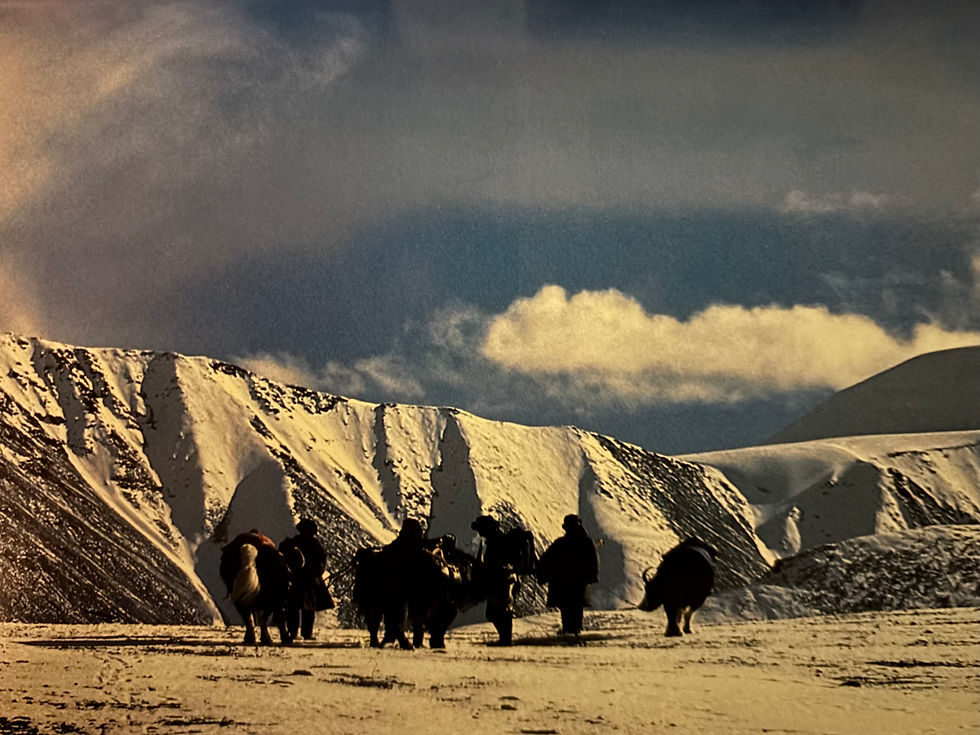
1978 marked the first access by foreign hunters. Outfitting was crude and experimental to say the least. But the lure of its mountain and forest species proved to be too unquenchable to resist for the pioneer hunters of that era.
Hunting operations were centered in the vast northern and western regions. Blue Sheep (Bharal) was a big draw with several sub-species of Blue sheep existing in Qinghai, Gansu, and Helan Mountain regions (and Tibet).

China is also home to the most diverse mix of Argali species. Littledale Argali, Tien Shan Argali, Sair Argali, Marco Polo Argali, Gansu Argali, Gobi Argali, and Altai Argali are found in the high arid northwestern and northcentral regions of the country.

A plentiful number of other species made Argali combination hunts attractive to collectors. Depending on the main Argali species to be hunted and the region, combinations could include Wild boar, Tibetan gazelle, Hiller gazelle, Goitered gazelle, Gansu red deer, Alashan wapiti, Chinese sambar, Chinese muntjac, West Chinese Tufted deer, Sichuan takin, Golden takin and White-lipped deer, Mid-Asian ibex, and Gobi ibex.

China was both a mountain hunter’s dream and a forest hunter's dream.
We’ll continue to keep a perpetual eye on the situation. But beyond hoping that the policy of preservation pays off with reopening argali hunting, today's geopolitical tensions compound the likelihood of that happening. But we can still imagine what once was by reading the works of others. If you can get your hands on a copy, China Safari, written by Bob Lee of Hunting World fame, is one of the classics.
The bigger takeaway internalized after more than 50 years of international hunting and witnessing the volatile pendulum swings in hunting opportunities around the world is this: Don't wait.


